
Introduction: “But I Already Have Instagram — Isn’t That Enough?”
Many small business owners say this confidently:
“I already have Instagram, Facebook, and WhatsApp. Why do I need a website?”
At first, it sounds logical. Social media feels easy. It’s free. People are already there.
So why spend money or effort on a website?
Here’s the honest truth:
Social media can help people find you.
A website helps people trust you, choose you, and pay you.
If you run a small business — a shop, service, startup, or personal brand — this article will explain, in very simple language, why a website is no longer optional, even if you are active on social media.
No technical terms.
No confusing jargon.
Just clear, practical explanation.
What a Website Really Is (Most People Get This Wrong)
Many people think a website is:
- Just a digital visiting card
- A few pages with photos and phone numbers
- Something only “big companies” need
That thinking is outdated.
A website is actually:
- Your online office
- Your digital shop
- Your trust-building machine
- Your only platform you fully own
Unlike social media, your website belongs to you.
No algorithm decides who sees it.
Their is No platform can suddenly block or limit it.
No one can take it away overnight.
That alone makes it powerful.
How Customers Behave Today (Very Important)
Let’s understand how real customers think.
Imagine someone hears about your business from:
- A friend
- Google search
- WhatsApp message
What’s the first thing they do?
They search your business name on Google.
And then one of these happens:
Scenario 1: You Have a Website
They see:
- A clean website
- Clear explanation of what you do
- Photos, services, contact details
- Maybe testimonials or examples
Their mind says:
“This business looks real and professional.”
Scenario 2: You Don’t Have a Website
They see:
- Only a social media page
- Or worse — nothing clear
Their mind says:
“Is this business reliable? Are they serious?”
Most people won’t tell you this doubt.
They’ll just quietly choose someone else.
Social Media vs Website: The Core Difference
Let’s make this very simple.
Social Media Is:
- Borrowed land
- Controlled by algorithms
- Designed for entertainment, not decision-making
- Distracting (ads, reels, notifications everywhere)
A Website Is:
- Your own property
- Fully under your control
- Designed for clarity and trust
- Focused only on your business
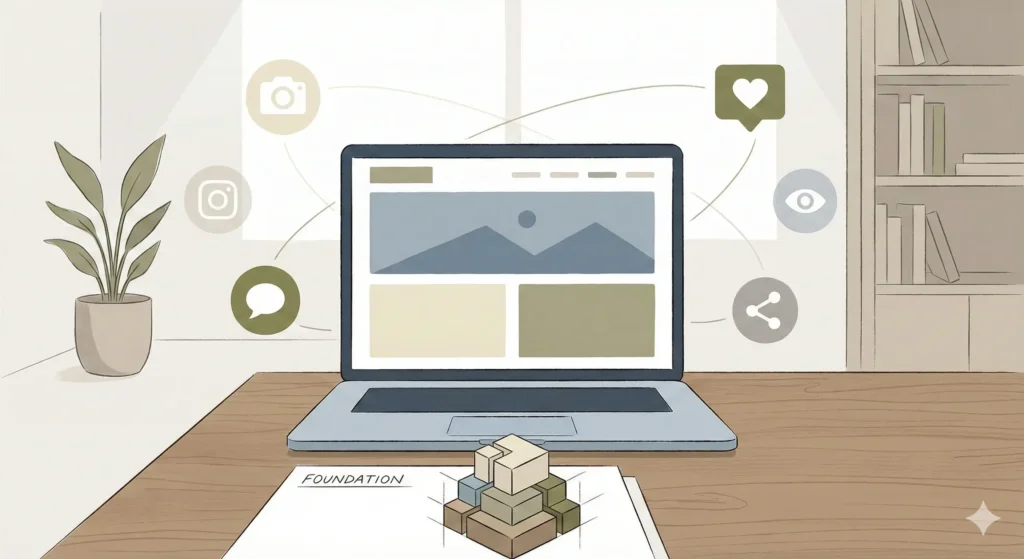
Social media helps with visibility.
A website helps with conversion.
You need both — but the website is the foundation.
Why Relying Only on Social Media Is Risky
Many businesses build everything on Instagram or Facebook.
This is dangerous.
Here’s why:
- Algorithm changes
- Today your posts reach people
- Tomorrow they don’t
- Account bans or restrictions
- One mistake, one report — and your page is gone
- Limited explanation
- You cannot clearly explain services in posts
- Low trust
- Anyone can create a page
- Customers know this
A website removes all these risks.
A Website Builds Instant Trust (Psychology Explained Simply)
Trust is not emotional.
It is visual and logical.
When people see a professional website, their brain assumes:
- This business is serious
- This person invested effort
- This is not a scam or temporary setup
Even if two businesses offer the same service:
- The one with a website is chosen more often
This happens subconsciously.
Websites Work 24/7 (Even When You Sleep)
You cannot reply to messages all the time.
But your website:
- Explains your services
- Answers basic questions
- Shows your work
- Collects inquiries
Even at 2 AM.
That’s not just convenience — that’s scalability.
Google Trusts Websites More Than Social Pages
If you want customers from Google, you must have a website.
Why?
Because:
- Google ranks websites, not Instagram profiles
- Google needs structured information
- Google trusts owned domains more
A website allows:
- Search traffic
- Long-term growth
- Free visitors without ads
Social media posts disappear quickly.
Websites grow stronger over time.
Real Example (Very Simple)
Imagine two local electricians.
Electrician A
- Instagram page
- Random posts
- Bio with phone number
Electrician B
- Website with:
- Services explained
- Area served
- Photos of work
- Contact form
Who would you trust with your home wiring?
Exactly.
A Website Makes You Look Bigger Than You Are
This is not fake.
This is smart positioning.
Even a one-person business with a clean website looks:
- Organized
- Professional
- Established
Customers don’t measure business size.
They measure confidence and clarity.
What Happens When You Don’t Have a Website
Let’s be brutally honest.
Without a website:
- You lose serious customers
- You attract only price shoppers
- You struggle to explain your value
- You depend fully on platforms you don’t control
Many small businesses stay “small” for this reason alone.
What a Small Business Website Actually Needs (Not Too Much)
Good news:
You don’t need a complex or expensive website.
A strong small business website needs only:
- Clear homepage
- What you do
- Who you help
- Services page
- Simple explanation
- About page
- Human story
- Contact page
- Easy to reach you
- Basic trust elements
- Photos
- Testimonials (if available)
That’s it.
More clarity beats more features.
Website + Social Media = Best Combination
This is the ideal setup:
- Social media brings attention
- Website converts attention into trust and leads
Your website becomes the final decision place.
Why “Free Platforms Only” Is a Losing Long-Term Strategy
Free platforms are good for starting.
They are terrible for building something stable.
A website is:
- A long-term asset
- A brand foundation
- A business backbone
Every serious business eventually builds one.
The smart ones do it early.
Final Truth (Read This Carefully)
If you are serious about:
- Growing your business
- Charging better prices
- Attracting quality customers
- Building long-term stability
Then a website is not optional.
It is basic infrastructure, like:
- A shop board
- A business phone number
- A proper office address
Social media alone is not a business.
It’s just noise without a foundation.
What You Should Do Next
If you already have:
- Social media → good
- Website → even better
If you don’t have a website yet:
- Start simple
- Focus on clarity
- Build it step by step
The earlier you start, the stronger it becomes.